
The FIFA World Cup is the absolute pinnacle of international football (soccer). Every four years, the globe comes to a standstill as billions of fans tune in to watch their national heroes compete for the most prestigious trophy in sports.
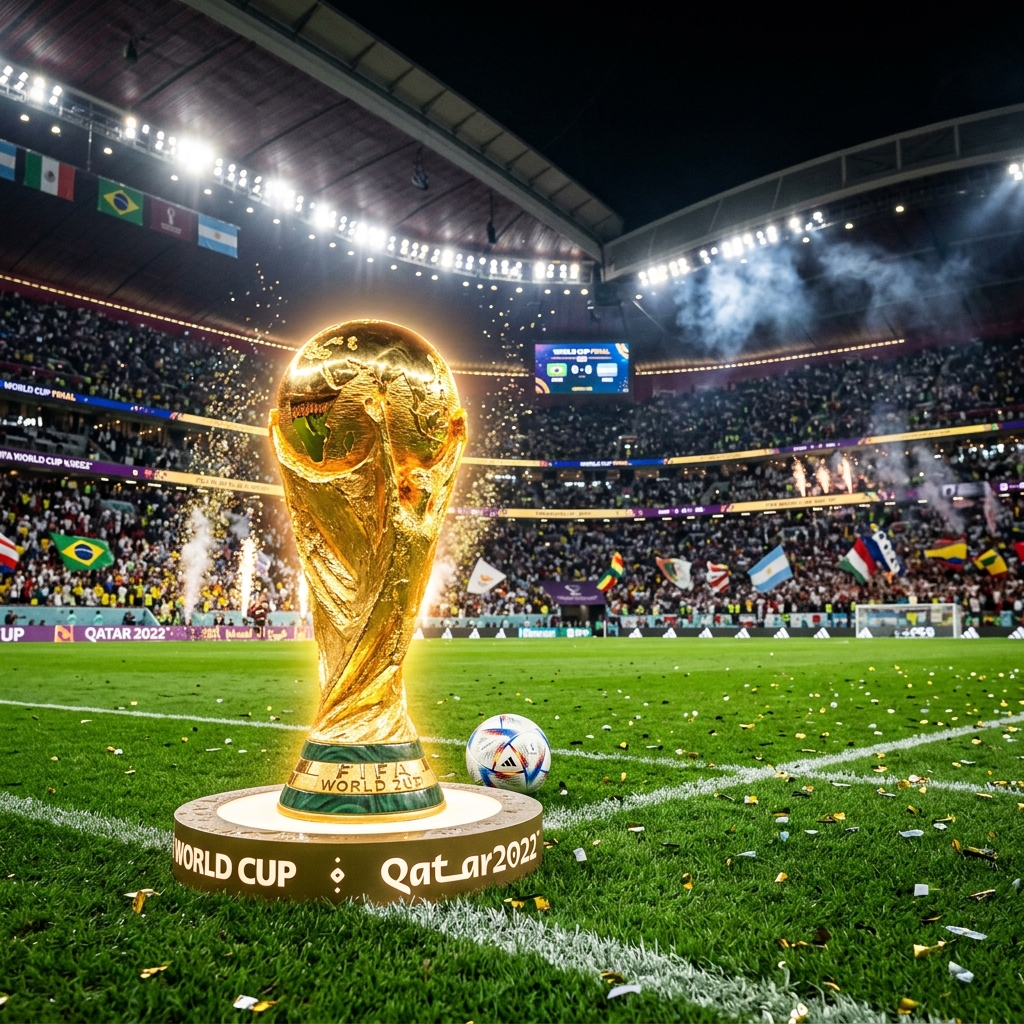
Quick Answer: Argentina won the most recent World Cup in 2022, defeating France in a thrilling final that will go down in history. Brazil holds the all-time record with 5 World Cup Previous Winners championships. Since the inaugural tournament in 1930, only 8 different countries have won the World Cup. The next edition, the 2026 World Cup, will be held across North America.
In this massive, comprehensive guide to World Cup Previous Winners, we are going to cover everything you could possibly want to know about the World Cup. We will look at the evolution of the tournament (including how many countries played each year), we will settle the debate on the greatest players of all time, and we will provide a deep dive into every single World Cup tournament ever played.
1. The Evolution of the World Cup: How Many Countries Played Each Year?
The World Cup has grown exponentially since its inception. What started as an invitational tournament with just 13 teams has blossomed into a massive global qualification process culminating in a huge final tournament. Here is the breakdown of how many countries participated in every World Cup tournament from 1930 to the modern day:
- 1930 Uruguay (13 Teams): The inaugural tournament did not have a qualification process. It was by invitation only. Only 13 teams made the long boat trip to Uruguay.
- 1934 Italy (16 Teams): The first tournament to feature a qualification stage. 16 teams qualified for the final tournament.
- 1938 France (15 Teams): 16 teams qualified, but Austria withdrew due to being annexed by Germany (the Anschluss), leaving 15 teams to compete.
- 1942 & 1946 (Not Held): The tournament was paused due to World War II.
- 1950 Brazil (13 Teams): 16 teams were scheduled to play, but Scotland, Turkey, and India withdrew after qualifying, resulting in only 13 teams participating.
- 1954 Switzerland (16 Teams): The tournament stabilized with a standard 16-team format.
- 1958 Sweden (16 Teams): 16 teams. This tournament marked the arrival of a 17-year-old Pelé.
- 1962 Chile (16 Teams): 16 teams participated.
- 1966 England (16 Teams): 16 teams. The tournament where football “came home.”
- 1970 Mexico (16 Teams): 16 teams. Widely considered to feature the greatest World Cup team ever (Brazil 1970).
- 1974 West Germany (16 Teams): 16 teams. Introduction of the current World Cup trophy.
- 1978 Argentina (16 Teams): 16 teams.
- 1982 Spain (24 Teams): The tournament expanded for the first time, allowing 24 teams to compete and increasing global representation, especially from Africa and Asia.
- 1986 Mexico (24 Teams): 24 teams. The tournament dominated by Diego Maradona.
- 1990 Italy (24 Teams): 24 teams.
- 1994 USA (24 Teams): 24 teams. Set the all-time attendance record.
- 1998 France (32 Teams): The tournament expanded again to 32 teams, the format that would be used for the next two decades.
- 2002 South Korea/Japan (32 Teams): 32 teams. The first World Cup held in Asia and the first co-hosted tournament.
- 2006 Germany (32 Teams): 32 teams.
- 2010 South Africa (32 Teams): 32 teams. The first World Cup held on the African continent.
- 2014 Brazil (32 Teams): 32 teams.
- 2018 Russia (32 Teams): 32 teams.
- 2022 Qatar (32 Teams): 32 teams. The final 32-team tournament, and the first held in the Middle East.
- 2026 USA/Canada/Mexico (48 Teams): The upcoming tournament will see a massive expansion to 48 teams, reflecting the incredible global growth of football.
2. The Greatest Players of All Time (GOATs)
When discussing the World Cup Previous Winners, one must discuss the titans who shaped the beautiful game. While “greatest” is subjective, these players have etched their names into eternity through their incredible World Cup performances.
Lionel Messi (Argentina)
For a long time, the only critique of Lionel Messi was that he had never won a World Cup. That all changed in 2022. Messi put on a legendary performance in Qatar, scoring 7 goals and providing 3 assists. He won the Golden Ball as the tournament’s best player and finally lifted the trophy, cementing his status in the eyes of many as the undisputed Greatest of All Time. Messi is the all-time leader in World Cup appearances and has won two Golden Balls (2014, 2022).
Pelé (Brazil)
Edson Arantes do Nascimento, known globally as Pelé, is the only player in history to win three World Cups (1958, 1962, 1970). He burst onto the scene in 1958 as a 17-year-old phenom, scoring spectacular goals in the semi-final and final. In 1970, he was the crown jewel of what is widely considered the greatest football team ever assembled. Pelé’s flair, athleticism, and goal-scoring ability revolutionized the sport.
Diego Maradona (Argentina)
Diego Maradona’s 1986 World Cup campaign in Mexico is widely regarded as the greatest individual performance in the history of the tournament. He practically dragged Argentina to the title single-handedly. His quarter-final match against England is infamous for featuring both the “Hand of God” goal and the “Goal of the Century”—a stunning solo run that encapsulates his genius.
Cristiano Ronaldo (Portugal)
While Ronaldo has not won a World Cup, his individual brilliance cannot be ignored. He is the only male player in history to score in five different World Cup tournaments (2006, 2010, 2014, 2018, 2022). His dedication, athleticism, and relentless drive make him one of the two standout players of his generation, alongside Messi.
Zinedine Zidane (France)
“Zizou” was the definition of elegance and big-game mentality. He scored two headers in the 1998 World Cup final to lead France to their first title. Eight years later, in 2006, he put on a masterclass tournament, carrying an aging French squad to the final, winning the Golden Ball, and famously ending his career with a dramatic headbutt in his final match.
Ronaldo Nazário (Brazil)
“O Fenômeno” was an unstoppable force of nature. Before a mysterious illness before the 1998 final, he was terrorizing defenses. He returned in 2002 after suffering career-threatening knee injuries to score 8 goals, including two in the final, leading Brazil to their fifth title. For a long time, he was the World Cup’s all-time top scorer.
Franz Beckenbauer (Germany)
“Der Kaiser” reinvented the role of the sweeper (libero). He won the World Cup as a player in 1974, captaining West Germany to victory over Johan Cruyff’s Netherlands. He later won it as a manager in 1990. His elegance on the ball and tactical genius make him one of the greatest defensive players in history.
Johan Cruyff (Netherlands)
Cruyff never won a World Cup, famously losing the 1974 final to West Germany, but he changed football forever. The visionary behind “Total Football,” Cruyff’s tactical understanding and supreme technical ability laid the groundwork for modern football. The “Cruyff Turn,” debuted at the 1974 World Cup, remains a staple skill to this day.
Miroslav Klose (Germany)
While perhaps not possessing the raw flair of Maradona or Pelé, Klose holds a record that demands immense respect: he is the all-time top goalscorer in FIFA World Cup history with 16 goals. A consummate professional and a deadly poacher, Klose’s consistency across four tournaments (2002-2014) is a testament to his greatness.
3. The Complete History of World Cup Winners
Here is the full list of World Cup Previous Winners, detailing the scorelines and the hosts.
| Year | Hosts | Winner | Score | Runner-Up |
|---|---|---|---|---|
| 2026 | North America | – | – | – |
| 2022 | Qatar | Argentina | 3-3 (4-2 on penalties) | France |
| 2018 | Russia | France | 4-2 | Croatia |
| 2014 | Brazil | Germany | 1-0 (a.e.t) | Argentina |
| 2010 | South Africa | Spain | 1-0 (a.e.t) | Netherlands |
| 2006 | Germany | Italy | 1-1 (5-3 on penalties) | France |
| 2002 | Korea & Japan | Brazil | 2-0 | Germany |
| 1998 | France | France | 3-0 | Brazil |
| 1994 | USA | Brazil | 0-0 (3-2 on penalties) | Italy |
| 1990 | Italy | Germany | 1-0 | Argentina |
| 1986 | Mexico | Argentina | 3-2 | Germany |
| 1982 | Spain | Italy | 3-1 | Germany |
| 1978 | Argentina | Argentina | 3-1 (a.e.t) | Netherlands |
| 1974 | Germany | Germany | 2-1 | Netherlands |
| 1970 | Mexico | Brazil | 4-1 | Italy |
| 1966 | England | England | 4-2 (a.e.t) | Germany |
| 1962 | Chile | Brazil | 3-1 | Czechoslovakia |
| 1958 | Sweden | Brazil | 5-2 | Sweden |
| 1954 | Switzerland | Germany | 3-2 | Hungary |
| 1950 | Brazil | Uruguay | 2-1 | Brazil |
| 1938 | France | Italy | 4-2 | Hungary |
| 1934 | Italy | Italy | 2-1 (a.e.t) | Czechoslovakia |
| 1930 | Uruguay | Uruguay | 4-2 | Argentina |
A Deep Dive into World Cup History
1930 Uruguay: The Beginning
Uruguay hosted and won the inaugural tournament, defeating Argentina 4-2 in the final. Only 13 teams participated due to the difficulty of transatlantic travel.
1950 Brazil: The Maracanazo
The 1950 World Cup is famous for its final match format (a round-robin) and the ultimate upset. Brazil only needed a draw against Uruguay in the final match at the Maracanã stadium to win. Over 200,000 fans packed the stadium, but Uruguay shocked the world with a 2-1 victory, an event forever known as the “Maracanazo.”
1958 Sweden: A Star is Born
This tournament is remembered for the emergence of a 17-year-old Pelé, who scored a hat-trick in the semi-final and two goals in the final as Brazil claimed their first title.
1966 England: Football Comes Home
England hosted and won their first and only World Cup, defeating West Germany 4-2 in the final at Wembley Stadium, highlighted by Geoff Hurst’s famous (and controversial) hat-trick.
1970 Mexico: The Beautiful Game
Brazil’s 1970 team is often cited as the greatest of all time. Featuring Pelé, Jairzinho, Tostão, and Rivellino, they played breathtaking, attacking football, thrashing Italy 4-1 in the final.
1986 Mexico: The Maradona Show
Diego Maradona delivered arguably the greatest individual tournament performance in history, captaining Argentina to glory and scoring unbelievable goals against England and Belgium.
1998 France: Zizou’s Glory
France hosted and won their first World Cup, dominating a Brazilian team that suffered from the mysterious pre-match illness of their star striker, Ronaldo. Zinedine Zidane scored two bullet headers in the final.
2014 Brazil: The Mineirazo
Germany became the first European team to win a World Cup in the Americas. The tournament is most remembered for Germany’s historic 7-1 annihilation of hosts Brazil in the semi-final.
2022 Qatar: Messi’s Destiny
In one of the greatest finals ever played, Argentina blew a 2-0 lead to France, eventually drawing 3-3 after extra time thanks to a Kylian Mbappé hat-trick. Argentina won on penalties, finally giving Lionel Messi his World Cup.
4. Countries with the Most World Cup Previous Winners
Only 8 nations have ever had the privilege of lifting the World Cup. Here is the breakdown:
- 🥇 BRAZIL – 5 World Cups (1958, 1962, 1970, 1994, 2002). Brazil is the spiritual home of football. They are the only nation to have played in every single World Cup tournament. Their 5 titles reflect their historic dominance and commitment to “Joga Bonito” (The Beautiful Game).
- 🥈 GERMANY – 4 World Cups (1954, 1974, 1990, 2014). Germany is the model of consistency. In addition to their 4 wins, they have reached the final 4 other times. Their machine-like efficiency and tactical brilliance make them a perpetual threat.
- 🥉 ITALY – 4 World Cups (1934, 1938, 1982, 2006). Italy’s success is built on legendary defensive solidity and tactical mastery. They were the first team to win back-to-back titles in the 1930s.
Remaining Winners:
- Argentina (3 Titles): 1978, 1986, 2022. Driven by the individual brilliance of Kempes, Maradona, and Messi.
- France (2 Titles): 1998, 2018. A modern powerhouse producing some of the world’s best talent.
- Uruguay (2 Titles): 1930, 1950. The early pioneers of global football.
- England (1 Title): 1966. The inventors of the modern game.
- Spain (1 Title): 2010. Won during an unprecedented era of dominance using their famous “Tiki-Taka” passing style.
The Heartbreak: Countries That Have Never Won
- Netherlands: The undisputed kings of finishing second. They have reached the final three times (1974, 1978, 2010) but have never won.
- Czechoslovakia / Hungary: Both legendary footballing nations reached two finals in the early-to-mid 20th century but fell short both times.
5. Frequently Asked Questions about World Cup Previous Winners
Which country has won the most World Cups?
Brazil has won the most FIFA World Cups with 5 titles (1958, 1962, 1970, 1994, 2002). Germany and Italy are tied for second with 4 championships each.
Who won the 2022 World Cup?
Argentina won the 2022 FIFA World Cup in Qatar, defeating France 4-2 on penalties after a 3-3 draw. It was Argentina’s third World Cup title and Lionel Messi’s first.
Who is the greatest World Cup player of all time?
This is highly debated, but the consensus usually centers around Pelé (the only player to win 3 World Cups), Diego Maradona (who dominated the 1986 tournament), and Lionel Messi (who delivered a legendary performance to win in 2022).
How many different countries have won the World Cup?
Eight different countries have won the World Cup: Brazil (5), Germany (4), Italy (4), Argentina (3), France (2), Uruguay (2), England (1), and Spain (1).
When and where is the next World Cup?
The 2026 FIFA World Cup will be held across three countries: United States, Canada, and Mexico. It will be the first World Cup to feature an expanded format of 48 teams.
Which teams have won consecutive World Cups?
Only two teams have won consecutive World Cups: Italy (1934, 1938) and Brazil (1958, 1962). No team has won three consecutive tournaments.
What was the most common score in World Cup history?
1-0 is the most common score in FIFA World Cup history. Many finals have been decided by a single goal, including recent finals in 2010 and 2014.
References
- FIFA. (2023). “FIFA World Cup History.” FIFA Official Website. Zurich.
- Wood, R.J. (2025). “World Cup Statistics and Records.” Topend Sports Database.
- UEFA. (2023). “European Champions at the World Cup.” UEFA Technical Reports.
- CONMEBOL. (2023). “South American World Cup Success.” CONMEBOL Historical Archives.
- The Guardian. (2022). “Qatar 2022: Argentina’s World Cup Victory.” The Guardian Sport.
- ESPN. (2023). “Complete World Cup Winners History 1930-2022.” ESPN FC Database.
- Sky Sports. (2024). “World Cup Records and Statistics.” Sky Sports Football.