
Ultimate Guide to Pharmacy POS Systems: Revolutionize Your Pharmacy Management
The healthcare industry is experiencing a profound technological transformation, and pharmacies are at the very heart of this shift. Gone are the days when managing a pharmacy meant keeping handwritten ledgers, manually counting stock on dusty shelves, and guessing when medications would expire. Today, the cornerstone of any successful, modern pharmacy is a robust Pharmacy Point of Sale (POS) system.
In this comprehensive guide, we will explore exactly what a Pharmacy POS system is, why it is an absolute necessity in today’s competitive landscape, the critical features you must look for, and how the right software can dramatically transform your operations, boost your profitability, and ultimately improve patient care.
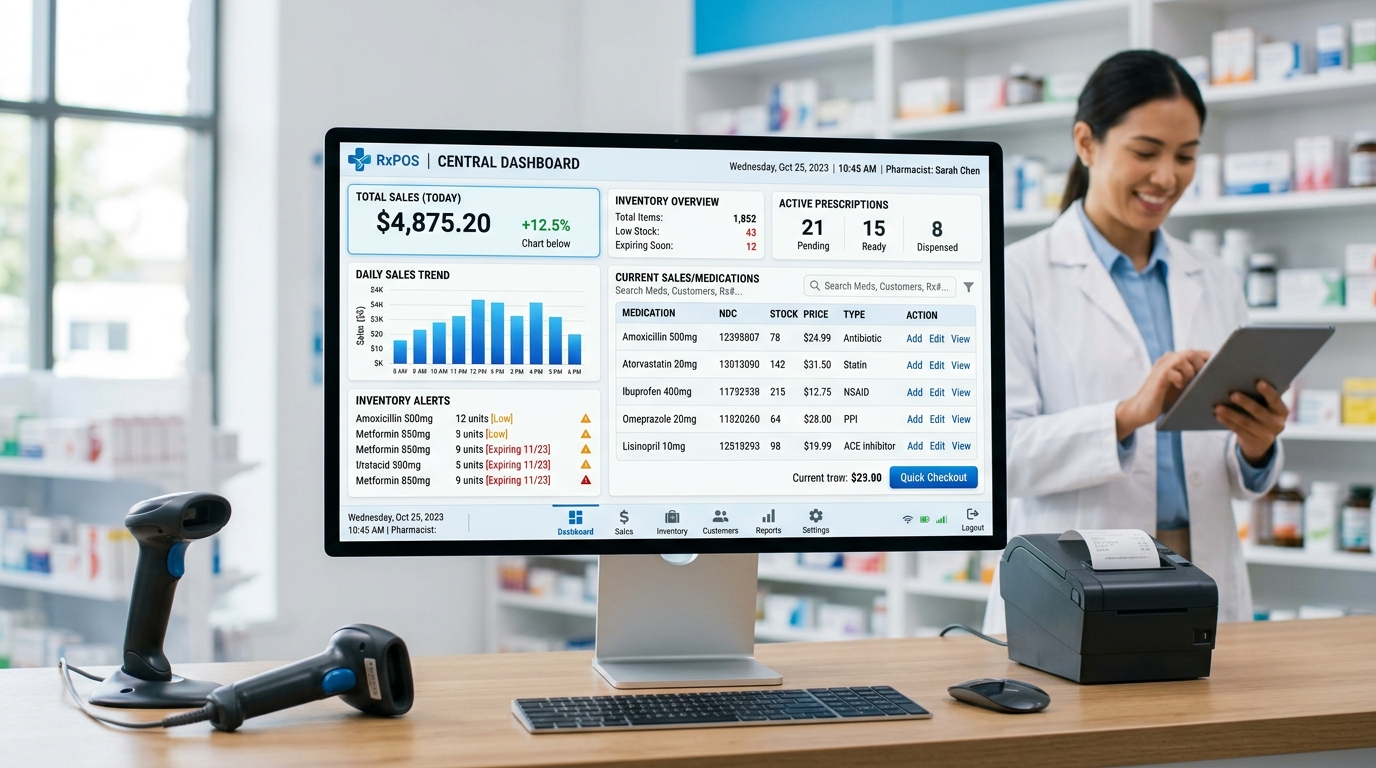
Whether you are a small independent pharmacist looking to scale your local store, or a large multi-branch enterprise needing centralized control, this guide will provide you with all the insights you need to make an informed decision. Furthermore, we invite you to experience the future of pharmacy management firsthand by testing out our live, interactive Pharmacy POS System Demo.
What is a Pharmacy POS System?
At its core, a Point of Sale (POS) system is the combination of software and hardware that enables a retail business to execute transactions and manage day-to-day operations. However, a Pharmacy POS System is fundamentally different from a standard retail POS system used in supermarkets or clothing stores.
While a standard POS focuses primarily on ringing up sales, managing basic inventory, and generating simple revenue reports, a Pharmacy POS is a specialized, industry-specific ecosystem designed to handle the unique, complex, and highly regulated environment of pharmaceutical retail.
A Pharmacy POS system bridges the gap between clinical operations and retail management. It is engineered to handle massive databases of medications, track incredibly granular inventory details (such as batch numbers, lot numbers, and strict expiration dates), manage electronic prescriptions, integrate with insurance providers, and maintain strict compliance with health data regulations.
In essence, a Pharmacy POS is not just a cash register; it is the central nervous system of the pharmacy. It tracks every pill that enters your storeroom, monitors its shelf life, facilitates its safe dispensation to the patient, and ensures that the financial transaction is recorded accurately while maintaining a complete audit trail.
Key Challenges in Modern Pharmacy Management
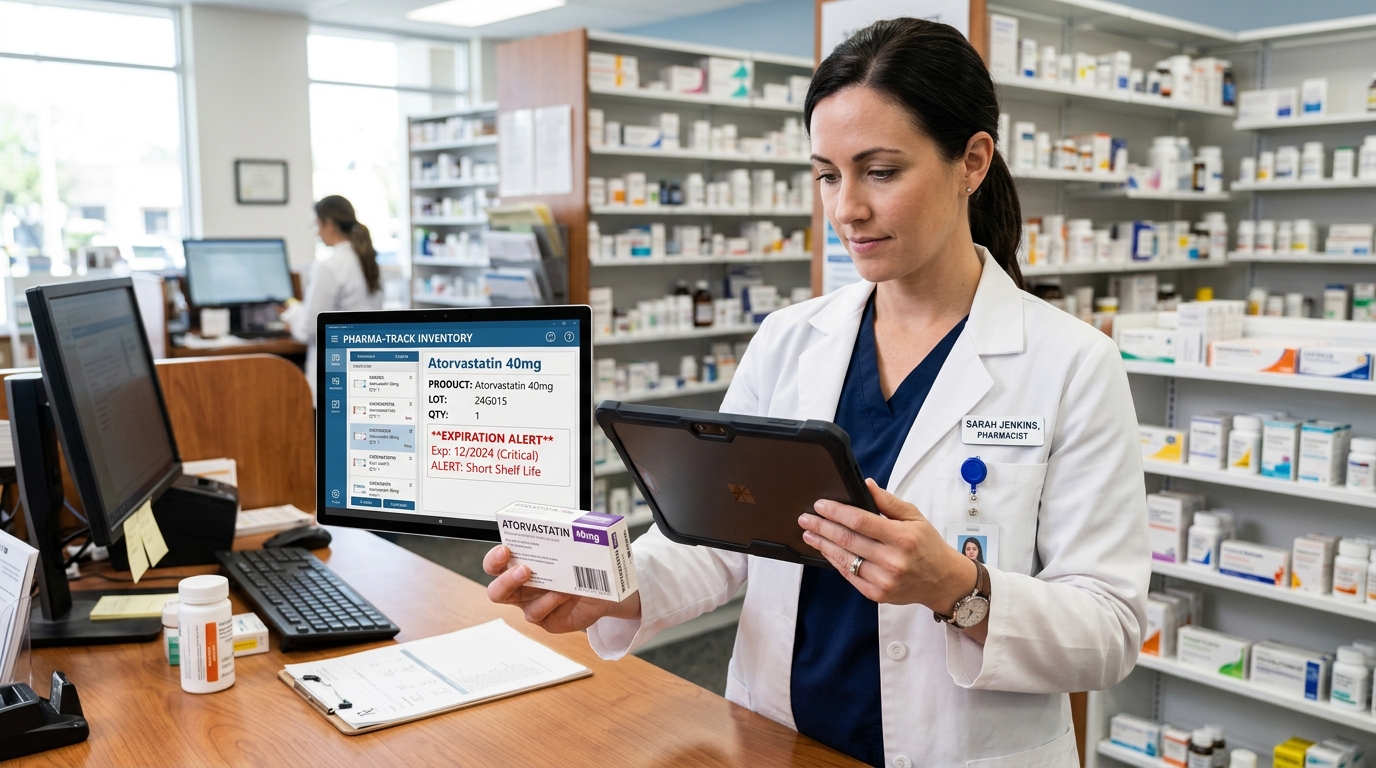
To truly appreciate the value of a Pharmacy POS system, one must first understand the myriad of challenges that modern pharmacy owners face on a daily basis. Running a pharmacy is one of the most complex retail operations in existence, primarily due to the nature of the products being sold.
1. Inventory Spoilage and Expiry Date Tracking
Unlike a clothing store where a t-shirt can sit on a shelf indefinitely, pharmacies deal in perishable goods with strict expiration dates. Expired medications cannot be sold legally or ethically; they must be disposed of safely. When a pharmacy relies on manual tracking or generic retail software, tracking expiration dates across thousands of SKUs becomes nearly impossible. This leads to massive financial losses due to inventory spoilage (shrinkage) and increases the risk of accidentally dispensing expired medication to a patient—a critical safety failure that could result in severe legal consequences and a destroyed reputation.
2. Regulatory Compliance and Audit Trails
Pharmacies operate in a highly regulated environment. Regulatory bodies require meticulous record-keeping of every controlled substance purchased, stored, and dispensed. Pharmacies are frequently audited, and failure to produce accurate records can lead to massive fines or the loss of the pharmacy license. Maintaining these complex audit trails manually using spreadsheets or paper logs is tedious, error-prone, and unsustainable as the business grows.
3. Supply Chain and Supplier Management
Pharmacies order medications from multiple wholesalers and manufacturers. Prices fluctuate constantly, and managing purchase orders, tracking deliveries, and updating the cost of goods sold (COGS) manually is a logistical nightmare. Without a system to automate reordering, pharmacies often find themselves out of stock on critical, life-saving medications, leading to lost sales and angry patients who will simply take their prescriptions to a competitor.
4. Patient Retention and Customer Relationship Management
Today’s consumers expect personalized service. They want their pharmacy to remember their medication history, remind them when it’s time for a refill, and offer loyalty programs. Generic POS systems do not have the capability to store complex patient profiles securely or send automated refill reminders. Without these CRM capabilities, pharmacies struggle to build long-term loyalty and lose patients to larger corporate chains.
5. Multi-Branch Complexity
For pharmacy owners who manage two, three, or twenty locations, the complexity multiplies exponentially. Keeping pricing consistent across branches, transferring stock between locations to prevent shortages, and consolidating financial reports without a centralized, cloud-based system requires an army of administrators.
These challenges are formidable, but they are completely solvable with the implementation of a modern, specialized Pharmacy POS system.
The Must-Have Features of an Elite Pharmacy POS System
When evaluating a Pharmacy POS system, it is crucial to recognize that not all software is created equal. To overcome the challenges outlined above and truly optimize your operations, your chosen system must possess a specific suite of features. Here is a detailed breakdown of the non-negotiable features every pharmacy owner should demand.
Advanced Expiry Date and Batch Tracking
This is arguably the most critical feature of a Pharmacy POS. The system must allow you to enter the batch number and expiration date for every item during the receiving process. As items are sold, the system should automatically enforce a “First In, First Out” (FIFO) or “First Expired, First Out” (FEFO) dispensing protocol.
Furthermore, the software must provide automated alerts and dynamic reporting that highlight items approaching their expiration date (e.g., 30, 60, or 90 days out). This empowers the pharmacy to run targeted promotions, return stock to suppliers (if permitted), or safely dispose of items before they become a liability, drastically reducing financial losses due to spoilage.
Intelligent Inventory and Reorder Management
A top-tier Pharmacy POS doesn’t just tell you what you have in stock; it tells you what you should have in stock. The system should calculate minimum and maximum stock levels based on historical sales data and seasonal trends. When an item falls below the minimum threshold, the POS should automatically generate a purchase order draft. This ensures that you are never overstocked (tying up valuable capital) and never understocked (missing out on sales and frustrating patients).
Comprehensive Prescription Management
The POS must seamlessly handle the transition from a doctor’s prescription to a completed retail sale. It should store patient profiles, linking them to their prescription history, allergies, and insurance information. The system must also support partial dispensing (if a patient only wants half their prescription now and the rest later) and seamlessly calculate co-pays and insurance claims.
Multi-Store (Multi-Branch) Architecture
If you plan to expand, your POS must be scalable. A cloud-based, multi-branch architecture allows you to manage all your locations from a single, centralized dashboard. You can standardize pricing, manage global inventory, initiate seamless inter-store stock transfers, and view consolidated financial reports. A centralized system means you don’t have to be physically present at a branch to know exactly how it is performing.
Integrated Barcode Scanning and Label Printing
Speed and accuracy at the checkout counter are paramount. The POS must integrate flawlessly with barcode scanners to ensure the correct medication is being dispensed every time. Additionally, it should support integrated label printers to generate custom prescription labels with dosage instructions, patient names, and warnings directly from the system, eliminating the need for separate, disconnected labeling software.
Dynamic Pricing and Promotional Rules
Pharmacies sell a mix of heavily regulated medications with fixed margins and fast-moving consumer goods (FMCG) like vitamins, cosmetics, and baby products where margins can be optimized. The POS must support dynamic pricing rules, bulk discounts, “Buy One Get One” (BOGO) offers, and customer loyalty points. This allows the pharmacy to remain competitive in the retail space while adhering to strict pricing regulations for clinical drugs.
Robust Financial and Analytical Reporting
Data is the new oil, even in the pharmacy business. Your POS should provide real-time dashboards and generate exhaustive reports on sales trends, profit margins, fast-moving vs. slow-moving items, cashier performance, and tax liabilities. These insights allow you to make data-driven decisions, optimize your purchasing strategy, and identify areas of revenue leakage.
Role-Based Access Control and Security
Pharmacies handle sensitive health data and large amounts of cash. The POS must feature strict role-based access control (RBAC). A cashier should only have access to the sales screen, while a manager can approve voids and returns, and only the owner or super-admin can view financial reports or alter system settings. Every action taken in the system must be logged with a timestamp and the user ID to ensure complete accountability and facilitate easy auditing.
How a POS Transforms Your Pharmacy Business
Understanding the features of a Pharmacy POS is one thing, but understanding the tangible impact these features have on the day-to-day reality of your business is where the true value lies. Implementing a specialized POS system is not just an IT upgrade; it is a holistic business transformation. Here is how a Pharmacy POS system will revolutionize your operations.
1. Drastic Reduction in Operational Inefficiencies
Manual data entry, physically counting pills to update inventory ledgers, and hunting through filing cabinets for past prescriptions consume hours of valuable time every single day. A POS system automates these mundane tasks. When inventory is updated the moment a barcode is scanned, and purchase orders are generated automatically, your pharmacists and staff are freed from administrative purgatory. They can redirect this massive amount of saved time toward what truly matters: consulting with patients, providing superior customer service, and finding new ways to grow the business.
2. Elimination of Revenue Leakage
Revenue leakage occurs in pharmacies through various subtle channels: expired stock that must be thrown away, pricing errors at the checkout, failure to collect co-pays, and employee theft. A robust POS system plugs all these holes. Automated expiry alerts eliminate spoilage. Centralized pricing ensures that a cashier can never accidentally (or intentionally) undercharge a customer. Comprehensive audit trails and role-based access control act as a powerful deterrent against internal theft. By plugging these leaks, the POS system essentially pays for itself within the first few months of operation.
3. Enhanced Patient Care and Safety
The primary mandate of any pharmacy is patient safety. Dispensing the wrong medication, or dispensing an expired drug, can be catastrophic. By utilizing barcode scanning integration, the POS ensures a 100% match between the prescribed drug and the dispensed box. Furthermore, by maintaining detailed patient profiles, the pharmacist can immediately identify potential drug interactions or severe allergies before handing the medication over the counter. This elevates the pharmacy from a simple retail storefront to a trusted, highly professional healthcare provider.
4. Data-Driven Scalability
Growth requires strategy, and strategy requires accurate data. When you rely on manual systems or generic POS software, you are flying blind. You might know your total daily revenue, but do you know your profit margin on generic vs. branded drugs? Do you know which days of the week require more staff? Do you know the lifetime value of your top 100 patients? A Pharmacy POS provides these granular analytics in real-time. With this data, you can confidently negotiate better rates with suppliers, optimize your staffing schedule, and strategically plan the opening of your second, third, or tenth branch.
Choosing the Right Software for Your Needs
The market is flooded with POS software providers, and selecting the right one can feel overwhelming. However, by focusing on a few key criteria, you can easily filter out the noise and select a system that will serve your pharmacy for decades to come.
Cloud-Based vs. On-Premise
Historically, POS systems were installed locally on a server sitting in the back room of the pharmacy. These “on-premise” systems are expensive to install, require constant IT maintenance, and restrict your access to data; you can only view reports when you are physically in the store.
Modern pharmacies must demand a Cloud-Based POS system. Cloud systems are hosted securely on remote servers. They require minimal upfront hardware investment, update automatically, and, most importantly, allow you to access your pharmacy’s live data from your smartphone or laptop from anywhere in the world.
Ease of Use and Training
Your POS system will be used daily by people with varying degrees of technical literacy. If the software looks like a spreadsheet from 1995 and requires a Ph.D. in computer science to operate, your staff will rebel, and the implementation will fail. Look for a system with a clean, intuitive, and modern User Interface (UI). A good POS system should be so user-friendly that a new cashier can learn to process a basic sale within 15 minutes of training.
Seamless Integration Capabilities
No software operates in a vacuum. Your Pharmacy POS must play well with others. It should integrate seamlessly with barcode scanners, receipt printers, cash drawers, and thermal label printers. Furthermore, as your business grows, you may want to integrate with third-party accounting software (like QuickBooks or Xero), SMS gateways for patient reminders, or even an eCommerce platform if you decide to sell non-prescription items online. Ensure the vendor provides a robust API or native integrations.
Dedicated Customer Support
When your POS system goes down on a busy Monday morning, you cannot afford to wait 48 hours for an email reply. You are losing money every minute the system is offline. Before purchasing any system, rigorously evaluate the vendor’s customer support infrastructure. Do they offer 24/7 phone support? Do they have a comprehensive knowledge base? Do they understand the specific urgencies of the pharmaceutical retail sector?
Introducing Our Ultimate Pharmacy POS Demo
We understand that reading about features is entirely different from experiencing them. You need to see the intuitive interface, watch how fast a transaction can be processed, and explore the depth of the reporting dashboards yourself.
That is why we have built a fully functional, highly optimized Pharmacy POS System tailored specifically for modern pharmaceutical retail, and we are making it available for you to test drive today.
Our system incorporates all the elite features discussed in this guide:
– Bulletproof Expiry Tracking: Never lose money to spoiled stock again.
– Lightning-Fast Cloud Architecture: Access your data securely from anywhere.
– Granular Role Management: Protect your data and your profits.
– Advanced Inventory Alerts: Automate your supply chain.
– Beautiful, Intuitive UI: Eliminate staff training headaches.
We have configured a live demo environment where you can log in as an administrator, add products, process mock sales, and explore the analytics dashboards without any risk or complex setup.
Ready to revolutionize your pharmacy?Experience the Live Pharmacy POS Demo Here
Conclusion
The pharmaceutical retail landscape is evolving rapidly. Margins are tightening, competition from massive corporate chains and online pharmacies is increasing, and regulatory scrutiny is more intense than ever. In this environment, relying on outdated manual processes or generic retail software is a recipe for stagnation and eventual failure.
Investing in a specialized, cloud-based Pharmacy POS system is the single most impactful decision you can make for the future of your business. It is the catalyst that transforms a chaotic, stressful storefront into a streamlined, profitable, and highly professional healthcare operation. It empowers your staff, protects your patients, and provides you, the owner, with the ultimate luxury: peace of mind.
Don’t let your pharmacy be left behind in the digital age. Embrace the technology, optimize your operations, and take the first step towards unprecedented growth by testing our live demo today. The future of your pharmacy is just one click away.
The Common Pitfalls of POS Implementation (And How to Avoid Them)
Transitioning to a new Pharmacy POS system is a significant operational shift. While the long-term benefits are undeniable, the implementation phase can be rocky if not managed correctly. Being aware of these common pitfalls will save you time, money, and immense frustration.
1. Inadequate Staff Training
The most advanced software in the world is useless if your staff refuses to use it or uses it incorrectly. A common mistake is rushing the deployment and expecting cashiers and pharmacists to “figure it out” on the fly. This leads to slow checkout times, frustrated patients, and errors in data entry.
The Solution: Mandate comprehensive training sessions before the system goes live. Run a “mock environment” (like our demo) where staff can practice ringing up complex prescriptions, processing returns, and handling split payments without the pressure of a real customer waiting in line.
2. Poor Data Migration
If you are moving from an older system, transferring your existing data (patient profiles, inventory lists, historical sales) is critical. Migrating dirty data—such as duplicate patient profiles or outdated inventory items—will pollute your new, clean system from day one.
The Solution: Clean your data before you migrate. Use the transition as an opportunity to perform a physical stock take, write off dead stock, and consolidate duplicate records. Ensure the new POS vendor provides robust data import tools and offers technical assistance during this critical phase.
3. Ignoring the Importance of Hardware Compatibility
Purchasing a top-tier software subscription and trying to run it on ten-year-old computers with malfunctioning receipt printers is a recipe for disaster. The software will run slowly, the printers will jam, and the overall experience will be terrible.
The Solution: Budget for hardware upgrades alongside your software investment. Ensure that your barcode scanners, cash drawers, and thermal printers are officially supported and certified by the POS software vendor.
4. Overlooking Security Protocols
During the excitement of a new software rollout, security is often treated as an afterthought. Failing to set up proper user roles (e.g., giving cashiers administrative rights) or neglecting to enforce strong passwords leaves your pharmacy vulnerable to internal theft and data breaches.
The Solution: Implement strict Role-Based Access Control (RBAC) before the system goes live. Ensure that every employee has their own unique login credentials and that the system logs every action to the specific user.
The Future of Pharmacy Management: AI and Automation

The Pharmacy POS systems of today are powerful, but the technology is evolving rapidly. Forward-thinking pharmacy owners must keep an eye on the horizon to understand how the next wave of technological innovation—specifically Artificial Intelligence (AI) and deep automation—will further revolutionize the industry.
Predictive Inventory Purchasing
Currently, advanced POS systems trigger reorder alerts based on static minimum/maximum thresholds. In the near future, AI algorithms will analyze years of historical sales data, local demographic shifts, and even seasonal weather patterns to predict spikes in demand for specific medications (e.g., ordering more antihistamines precisely when local pollen counts are predicted to surge). This predictive purchasing will virtually eliminate stockouts and minimize tied-up capital.
Automated Patient Adherence Tracking
Patient non-adherence (failing to take prescribed medication) is a massive issue in healthcare. Future POS systems will integrate directly with patient management apps to automatically send targeted SMS or push notifications reminding patients to take their medication and prompting them when a refill is due. Some systems may even use AI to flag patients who are statistically at high risk for non-adherence, prompting the pharmacist to provide a specialized consultation.
AI-Driven Pricing Optimization
While regulated drug prices remain static, front-of-store retail items offer flexible margins. AI engines will continuously analyze competitor pricing, local demand, and supplier costs to automatically adjust retail prices in real-time, ensuring maximum profitability without sacrificing volume.
Building a Future-Proof Pharmacy
To survive and thrive in the coming decades, pharmacies must evolve from traditional retail storefronts into dynamic, technology-driven healthcare hubs. The foundation of this evolution is the Pharmacy POS system. It is the engine that drives operational efficiency, enforces regulatory compliance, and enables the delivery of superior, personalized patient care.
By carefully evaluating your needs, demanding elite features like bulletproof expiry tracking and cloud architecture, and avoiding common implementation pitfalls, you can transform your pharmacy into a highly profitable, highly respected cornerstone of your community.
We invite you once again to take the first step on this transformative journey. Do not just take our word for it—experience the power, speed, and intuitive design of a world-class system yourself.
👉 Access the Live Pharmacy POS Demo Here(Admin credentials are pre-filled. Click Login and start exploring!)